A wetlands appeal filed by a group of Lexington residents has frozen most construction at the new Lexington High School site, with costs already climbing by at least $1 million and potentially exceeding $12 million if the state takes months to rule.
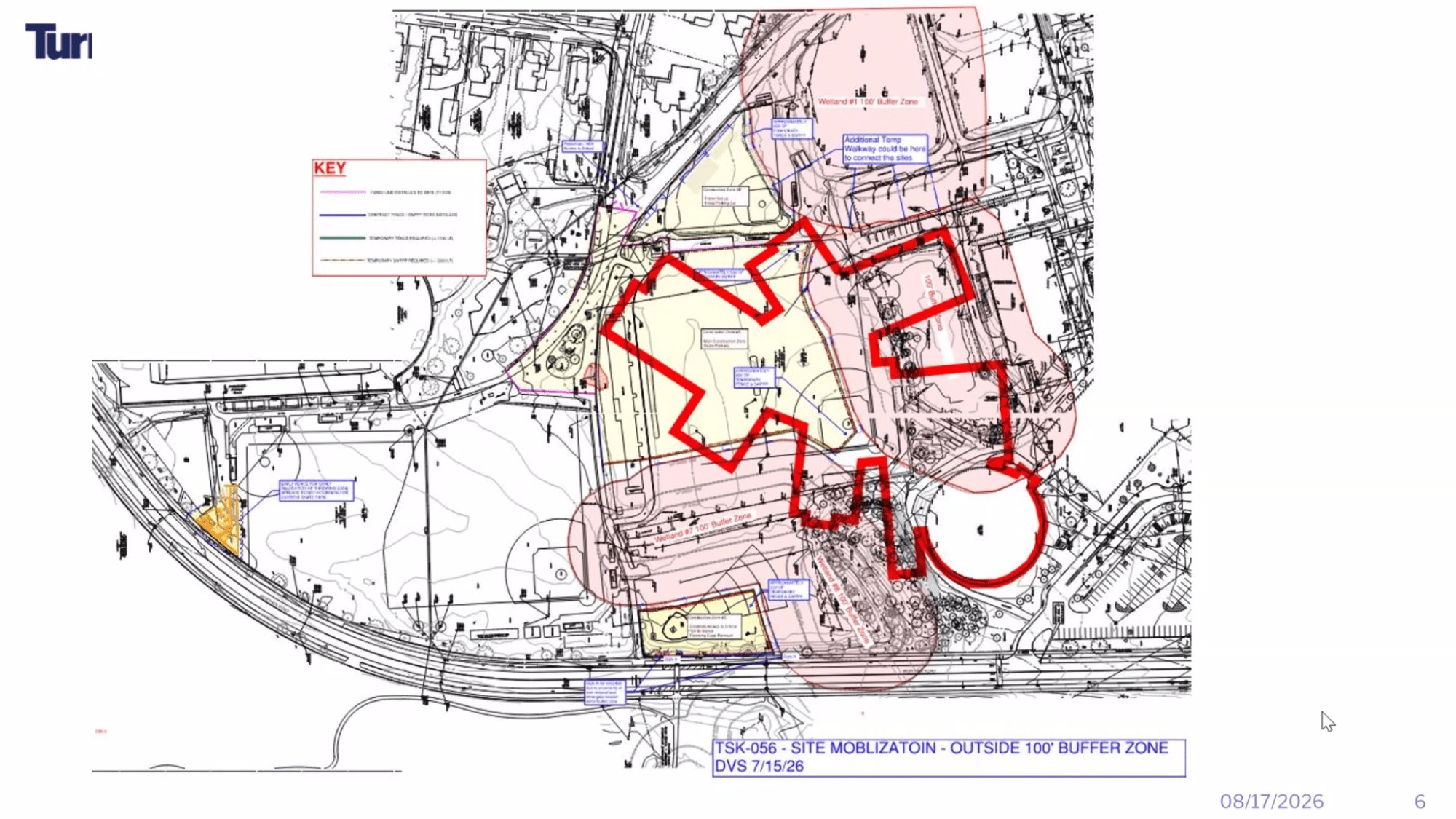
The Massachusetts Department of Environmental Protection scheduled a site visit for Thursday, Aug. 27 at 10:30 a.m. after 12 residents, led by Jim Williams, filed an appeal on July 12 challenging whether the school's design adequately protects wetlands on the Waltham Street property. Until MassDEP issues a decision, Turner Construction cannot perform any work on or within 100 feet of the wetlands.
"Because of the work we're not able to do over the summer, an additional at least $1 million is not avoidable," School Building Committee Chair Kathleen Lenihan told the Lexington Observer.
The financial exposure scales with time. A decision by Sept. 1 would add $1 million to $2.5 million. A ruling by Oct. 1 pushes costs to $2.5 million to $5 million. If MassDEP delays past Nov. 1, the tab could exceed $12 million, according to a Turner Construction presentation shared at the SBC's Monday, Aug. 17 meeting. That last figure is an informal projection, not a formal cost analysis.
Missing the Oct. 1 deadline carries a second consequence: the new school could not open for the first semester of the 2029–2030 school year. Students would instead move in during winter break at the end of 2029. Mike Cronin, Lexington's director of public facilities, said that scenario would force the town to heat and maintain both the old and new buildings simultaneously through the cold months. The old building's continued presence would also block demolition needed to build new athletic fields, meaning students would be bused to off-site locations for sports longer than planned.
Turner's Jamie Meiser told the SBC on Aug. 17 that the appeal is having significant impacts on the project at this point.
Williams' appeal argues the Conservation Commission's Order of Conditions does not adequately protect the town's wetlands or the statutory interests of the Wetlands Protection Act. He has asked MassDEP to issue a Superseding Order of Conditions requiring the SBC to redesign the school to avoid wetland impacts entirely.
The SBC has maintained it already exhausted alternatives. The committee evaluated 299 vacant parcels in Lexington, investigated 15 further, and considered 19 building designs on the Waltham Street site before selecting the "Bloom" design. Residents approved a debt exclusion to finance the project in December 2025, and the design has backing from the Select Board, Town Meeting, the state legislature, the Massachusetts School Building Authority and the Conservation Commission itself.
Town Manager Steve Bartha called MassDEP's response standard for these types of appeals and noted that very few result in changes to local conservation decisions.
Williams did not respond to a request for comment on cost impacts. In the Lexington Discourse Google group, he blamed Town Counsel for the delays rather than his own appeal.
The next milestone is MassDEP's Thursday, Aug. 27 site visit. No additional SBC meeting date has been announced.