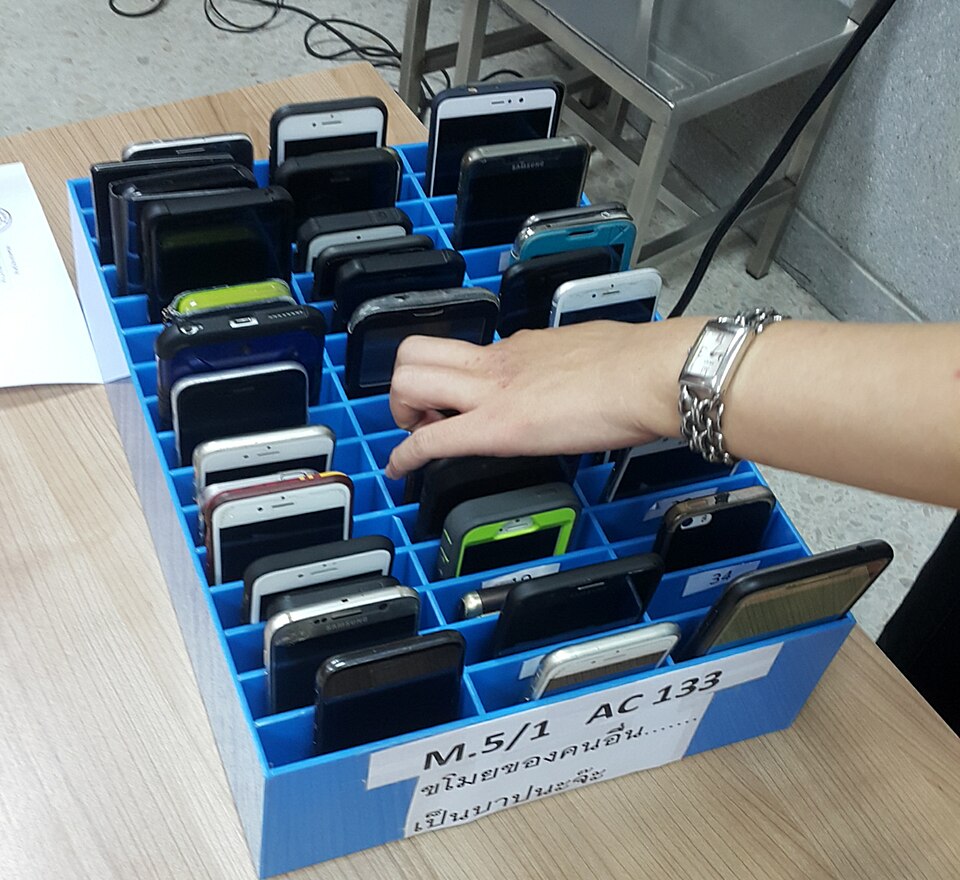
A Harvard education lecturer is pushing back against a proposed statewide cell phone ban in Massachusetts schools, arguing Lexington and other districts should set their own policies rather than follow a mandate from Beacon Hill.
The argument, and who's making it.
Michael Horn, a Harvard Graduate School of Education lecturer and co-founder of the Clayton Christensen Institute, wrote in the Lexington Observer that while smartphones are "likely detrimental to many students' mental health," a statewide ban would still be a mistake — partly because it would impose unfunded costs on districts like Lexington, and partly because it would strip away flexibility from teachers already using phones and educational apps successfully to reengage students. His letter responded directly to an earlier Observer report noting that cost was Lexington's School Committee's top concern when it met with state leaders on the issue.
What the actual bill would require.
Senate Bill 2581 would direct the state Department of Education to create a "bell-to-bell" policy banning electronic devices during school hours, requiring every public district to adopt some version of it and post it online by Sept. 1 each year. The bill remained in a conference committee as of mid-July, according to the Transparency Coalition. Massachusetts is currently one of just nine jurisdictions nationwide without any statewide phone restriction, according to a JAMA Pediatrics study reported by the Deseret News — 42 other jurisdictions already have laws or policies in place.
Concord-Carlisle is having the same debate.
Lexington isn't alone in weighing this. At an April joint meeting, the Concord-Carlisle and Concord School Committees discussed the same legislation, with Superintendent Dr. Laurie Hunter recommending the district wait for the state's formal framework before acting, according to meeting minutes. Two weeks earlier, Concord-Carlisle High School students told the committee they don't think phone use is actually excessive and opposed new restrictions, suggesting teachers just enforce the phone caddy system already in place.
Horn's alternative: fix the tools, not the rule.
Horn, who bans phones during most of his own Harvard classes, said the real issue isn't whether phones are a problem — they clearly can be, through disruption, AI-enabled cheating, and constant alerts. His proposed fix: have the state use its bulk purchasing power to negotiate discounts on phone-management tools for districts, like physical pouches and software that blocks distractions while still allowing emergency access. "State policy should instead focus on the student outcomes and choices we desire—and then empower educators far more than we do today to shape the inputs that meet those ends," Horn wrote.
Where things stand.
Lexington's School Committee, chaired by Larry Freeman, hasn't taken a public position on the bill. Final guidance from the Governor's office and the Department of Elementary and Secondary Education is still pending.