MassDOT's plan to replace the Route 2 rotary in Concord has ignited a fight between town residents who want to preserve Concord's character and regional commuters demanding relief from a junction that handles 50,000 vehicles a day. The four replacement designs range from $90 million to $200 million.
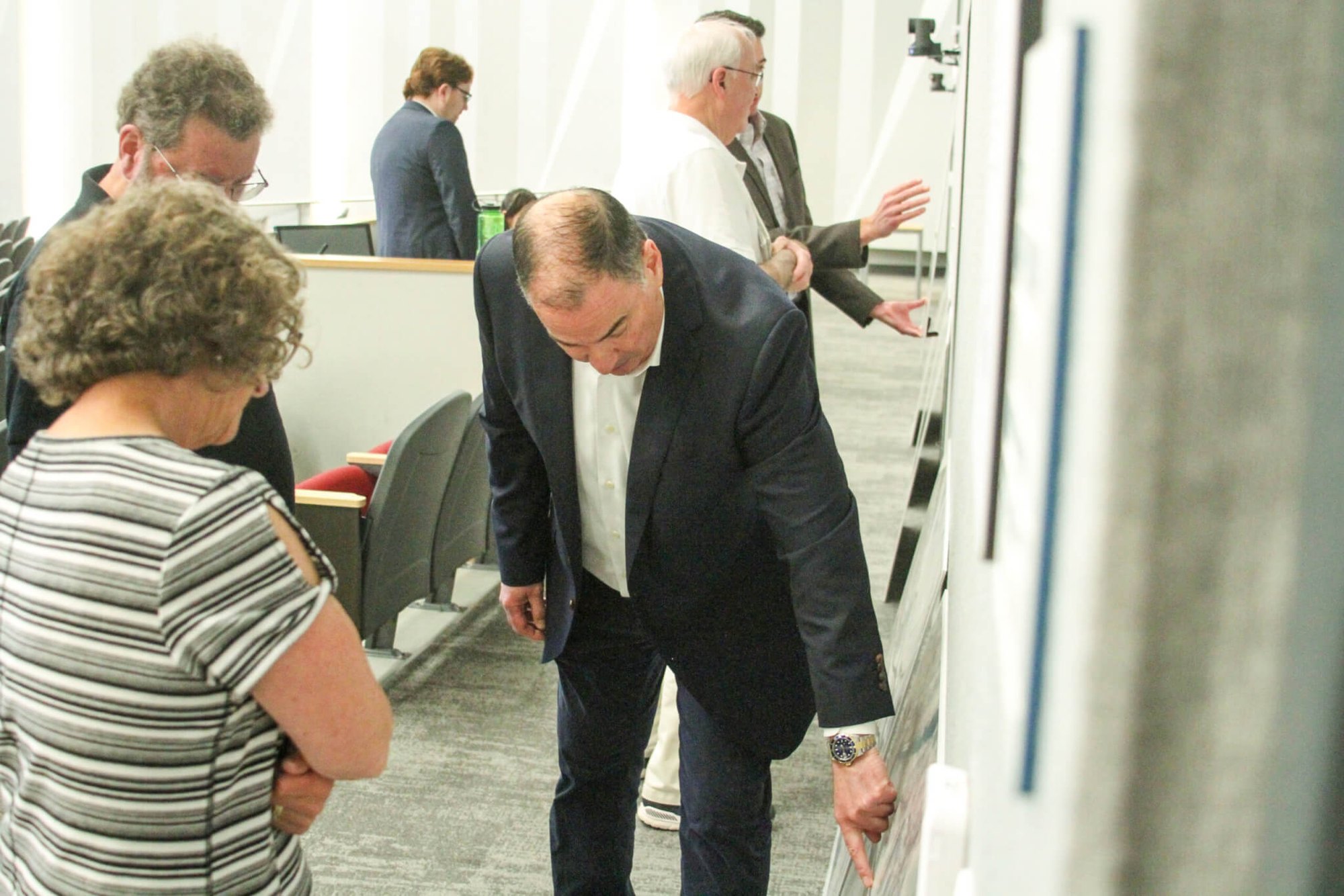
The agency presented the concepts at a public meeting Wednesday, June 24, at Concord Middle School. Cost estimates for the four alternatives were outlined at a May 11 legislative site visit organized by State Rep. Simon Cataldo, according to the Acton Exchange: a diamond interchange at $175–$200 million, a partial cloverleaf at $165–$180 million, a diverging diamond at $175–$200 million, and an at-grade split intersection at $90–$110 million.
The rotary connects Route 2, Route 2A/119, Barretts Mill Road, and Commonwealth Avenue. MassDOT classifies it and the adjacent Elm Street intersection as a high-crash cluster: 329 crashes from 2020 to 2024, including three suspected serious injuries. The rotary carries a Level of Service F rating during peak hours. Nearly 90 percent of those 50,000 vehicles are through-trips with no origin or destination in Concord, MassDOT data shows.
That statistic fuels the regional tension. Acton resident Carol Sarshik, who swims at the Beede Center and sees doctors at Emerson Hospital, called herself a "46-year survivor" of the rotary. Fellow Acton resident Carol Phillips said people live their lives around avoiding it and argued MassDOT must answer to more than Concord alone. Acton Select Board member Dean Charter said overflow traffic fills Acton streets when the rotary fails, affecting commuters as far west as Gardner.
Concord resident Josh Burgel pushed back, calling the June 24 meeting "an unmitigated disaster" and warning that the town has fought for years to keep an agrarian appearance. He favors a modified flyover that would depress Route 2 to reduce noise and visual impact.
The Concord Select Board has taken a position. Members Mary Hartman, Paul Boehm, Dean Banfield, and Chair Wendy Rovelli said they prefer the partial cloverleaf design, which reserves more space for the planned MCI-Concord prison site redevelopment. Boehm said MassDOT cannot ignore future traffic from that overhaul. Rovelli said the board will draft a letter to MassDOT for approval in July 2026.
"It's Concord. We knew this was coming," MassDOT project manager Dan Racicot said when hands shot up at the meeting.
All four alternatives require acquiring the Gulf gas station parcel at the rotary and replacing the Route 2 bridge over the Assabet River. Barretts Mill Road would be diverted into a T-intersection with Great Road instead of feeding into the current five-way junction.
MassDOT expects to identify a preferred alternative in fall 2026, begin 25 percent design in spring 2027, and advertise for construction bids in fiscal year 2030. Comments can be submitted to [email protected].