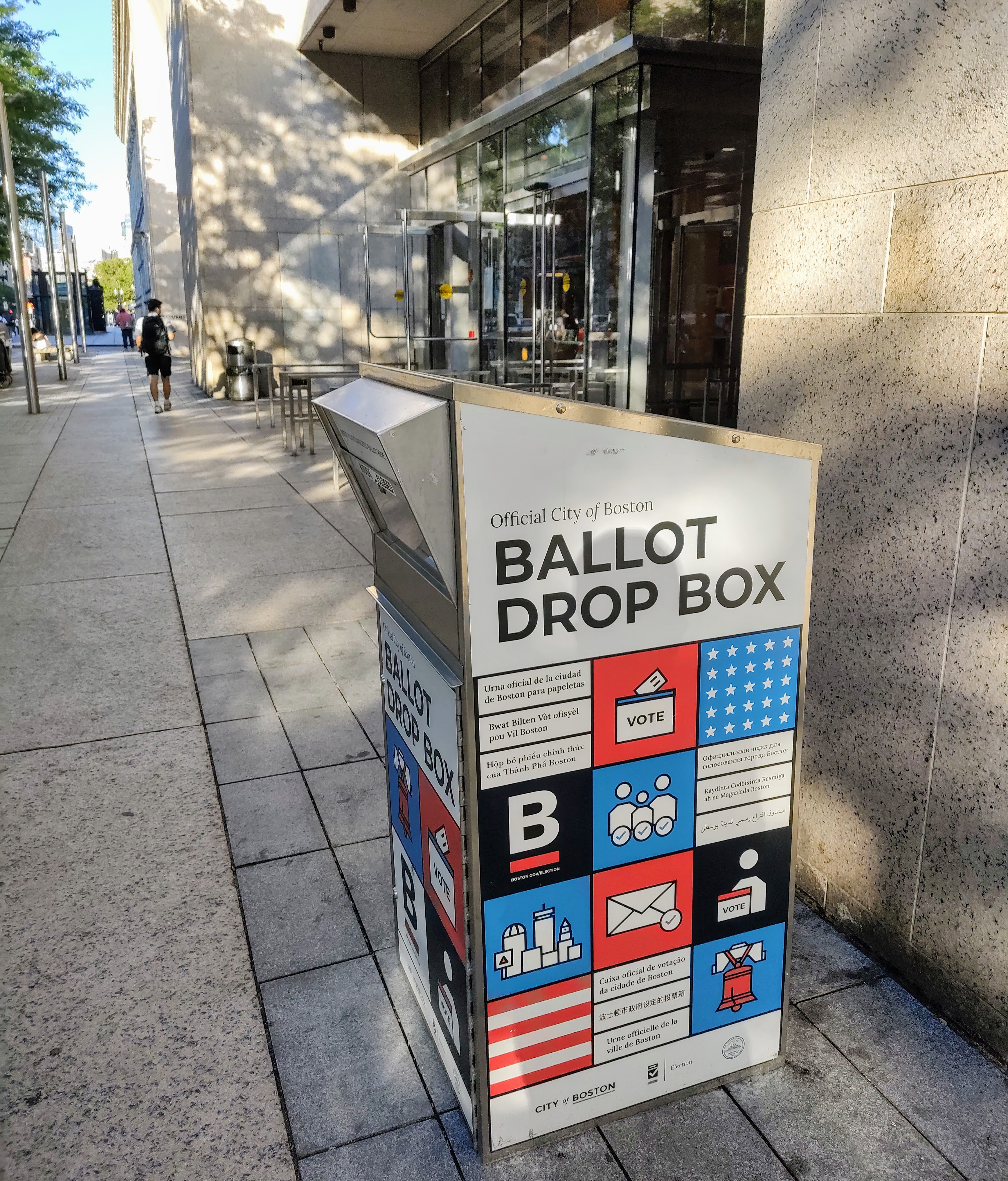
Lexington and Concord voters will weigh nine statewide ballot questions Tuesday, Nov. 3, covering government transparency, elections, taxes, conservation, housing, marijuana and firearms.
Polls are open from 7 a.m. to 8 p.m. Both towns publish polling information and sample ballots online: Lexington and Concord.
Concord’s ballot also includes a district-specific, nonbinding Question 10. Voters should review their own sample ballot for its wording.
The following summaries draw on the state’s official voter guide.
Question 1: Public records
The proposal would bring most records held by the Legislature and governor’s office under Massachusetts’ public records law.
Exemptions would remain for documents related to developing public policy and certain constituent communications involving government benefits, services or agency assistance.
Yes: Expand public access to those offices’ records.
No: Preserve the current law.
Question 2: Public defender employee unions
The proposal would allow employees of the Committee for Public Counsel Services, the state’s public defender agency, to form a union and bargain collectively with their employer.
Approval would give employees that choice; it would not automatically establish a union.
Yes: Allow unionization and collective bargaining.
No: Leave existing labor-relations law unchanged.
Question 3: All-party primaries
The proposal would replace separate party primaries for covered state elections with one primary ballot listing candidates regardless of party affiliation.
The two candidates receiving the most votes would advance to the general election, even if they belong to the same party. Candidates for governor and lieutenant governor would run jointly in the primary.
Yes: Establish the all-party, top-two primary system.
No: Keep the current primary system.
Question 4: Election Day registration
Eligible residents could register to vote or update their registration address at their assigned polling place on Election Day.
They would need proof of residency and a signed eligibility oath. People without documentation could cast provisional ballots, subject to deadlines for supplying proof.
The change would take effect Jan. 1, 2028. It would not allow unregistered residents to vote in Tuesday’s election or introduce registration at the polls during early voting.
Yes: Allow Election Day registration and address updates.
No: Keep current registration rules.
Question 5: State revenue limit and rebates
The proposal would change the formula determining how much tax revenue Massachusetts can retain before issuing taxpayer refunds.
Beginning July 1, 2027, the limit would be based on the previous year’s net state revenue, adjusted by average Massachusetts wage-and-salary growth over three years. Revenue from the surtax on incomes above $1 million would count toward the calculation.
The change could make refunds more frequent. The state’s fiscal analysis says it would also restrict revenue available for public services and reserves.
Yes: Adopt the new revenue-limit formula.
No: Keep the existing formula.
Question 6: Conservation funding
The proposal would create a Nature for All Fund using existing state taxes collected on sporting goods, recreational vehicles and golf courses, subject to legislative appropriation.
The fund would receive half of the qualifying revenue during its first year and all qualifying revenue after July 1, 2028, excluding designated transfers to transportation and school funds.
Money could support land and water conservation, parks, trails and outdoor recreation. A 15-member board would establish spending rules, with the Executive Office of Energy and Environmental Affairs administering the fund.
Yes: Create the conservation fund.
No: Leave current tax allocations unchanged.
Question 7: Homes on smaller lots
The proposal would require municipalities covered by the state zoning law to allow single-family homes on residential lots with at least 5,000 square feet, 50 feet of street frontage and access to public water and sewer.
Communities could retain reasonable rules governing height, setbacks, open space, parking and short-term rentals. Boston would be exempt because it operates under a separate zoning framework, WBUR reported.
The measure would override larger local lot-size requirements but would not require homes to sell at affordable prices. Supporters say it would expand housing choices; critics question its effect on affordability and local infrastructure.
Yes: Allow qualifying homes on smaller lots despite larger local requirements.
No: Preserve existing law.
Question 8: Recreational marijuana sales
The proposal would end Massachusetts’ legal recreational marijuana retail market beginning Jan. 1, 2028, while preserving medical marijuana.
Adults 21 and older could possess or give another adult up to one ounce, including no more than five grams of concentrate. The measure would also change possession penalties, including a $100 civil penalty and forfeiture for possessing between one and two ounces.
Yes: End legal recreational sales and change possession rules.
No: Keep current marijuana law.
Question 9: Firearms law
This question asks whether to retain Massachusetts’ 2024 firearms law.
The law regulates untraceable “ghost guns,” requires people to be 21 to own semiautomatic rifles or shotguns, expands extreme-risk protection procedures and updates licensing and training requirements. It also broadens the definition of a machine gun and establishes a public firearms-data dashboard.
Yes: Keep the 2024 law.
No: Repeal it.