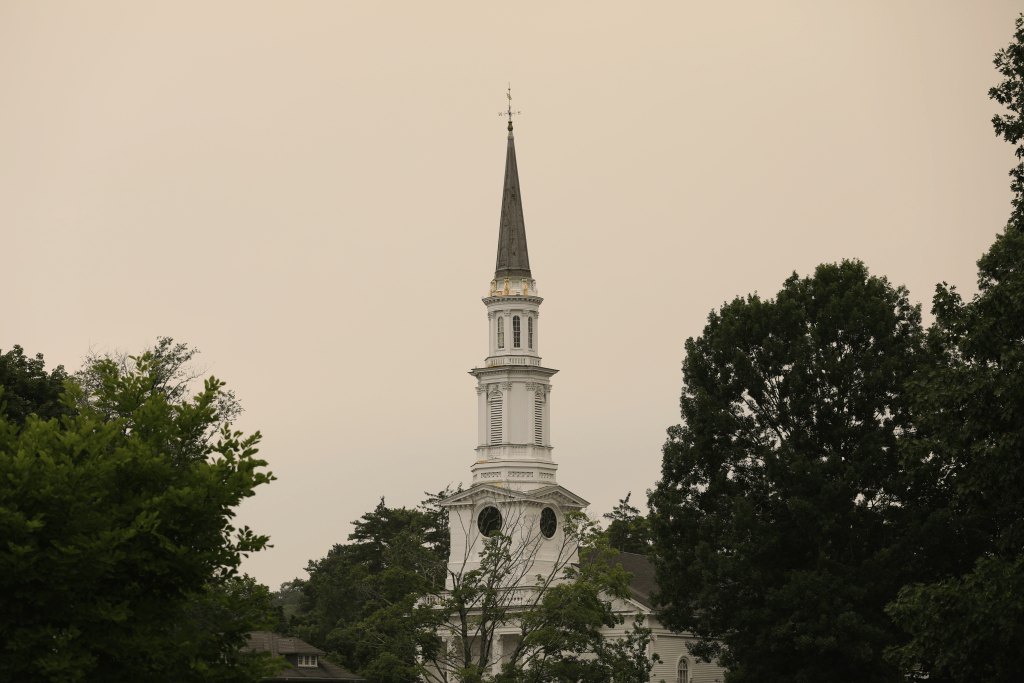
Smoke from more than 800 wildfires burning in Canada turned Lexington's sky a hazy brown on Wednesday, July 15, pushing the Boston-area Air Quality Index to about 130, well into the "unhealthy for sensitive groups" range, and prompting the National Weather Service to issue alerts across 17 states including Massachusetts.
The air smelled like a campfire and left many residents with scratchy throats, according to The Lexington Observer, which published photographs of the haze hanging over town. Children, adults over 65, and people with respiratory conditions such as asthma face the greatest risk at that pollution level.
The fires ignited in Ontario, Canada, and northern Minnesota, where extreme heat and dry conditions sparked explosive growth beginning Monday, July 13. Temperatures topped 100 degrees in parts of western Ontario. High-altitude steering winds from a jet stream pattern then funneled the smoke directly into the Northeast, according to WBUR meteorologist Danielle Noyes.
The haze lifted by Thursday morning, July 16, but WBUR meteorologists warned a second wave of thick smoke could push back into New England by Thursday evening. The Boston Globe reported that incoming high pressure should bring clearer skies on Friday, July 18, though the weekend forecast remains unsettled.
"The frequency and intensity of these wildfire smoke events are increasing," Dan Westervelt, an associate research professor at Columbia University's Lamont-Doherty Earth Observatory, told NPR on Thursday, July 16. He added that the fires are becoming an annual occurrence and sometimes more frequent than that.
Dr. David Eisenman, a professor of medicine at UCLA's David Geffen School of Medicine and co-director of the Center for Healthy Climate Solutions, told NPR that wildfire smoke particles can penetrate deep into the lungs and even enter the bloodstream. He recommended residents check air quality reports at AirNow.gov, run air purifiers indoors, and wear an N95 mask when going outside during smoky conditions.
The EPA also recommends setting up a "cleaner air room" in the home with an air purifier and stocking up on food and medications to avoid unnecessary outdoor trips when air quality is poor.