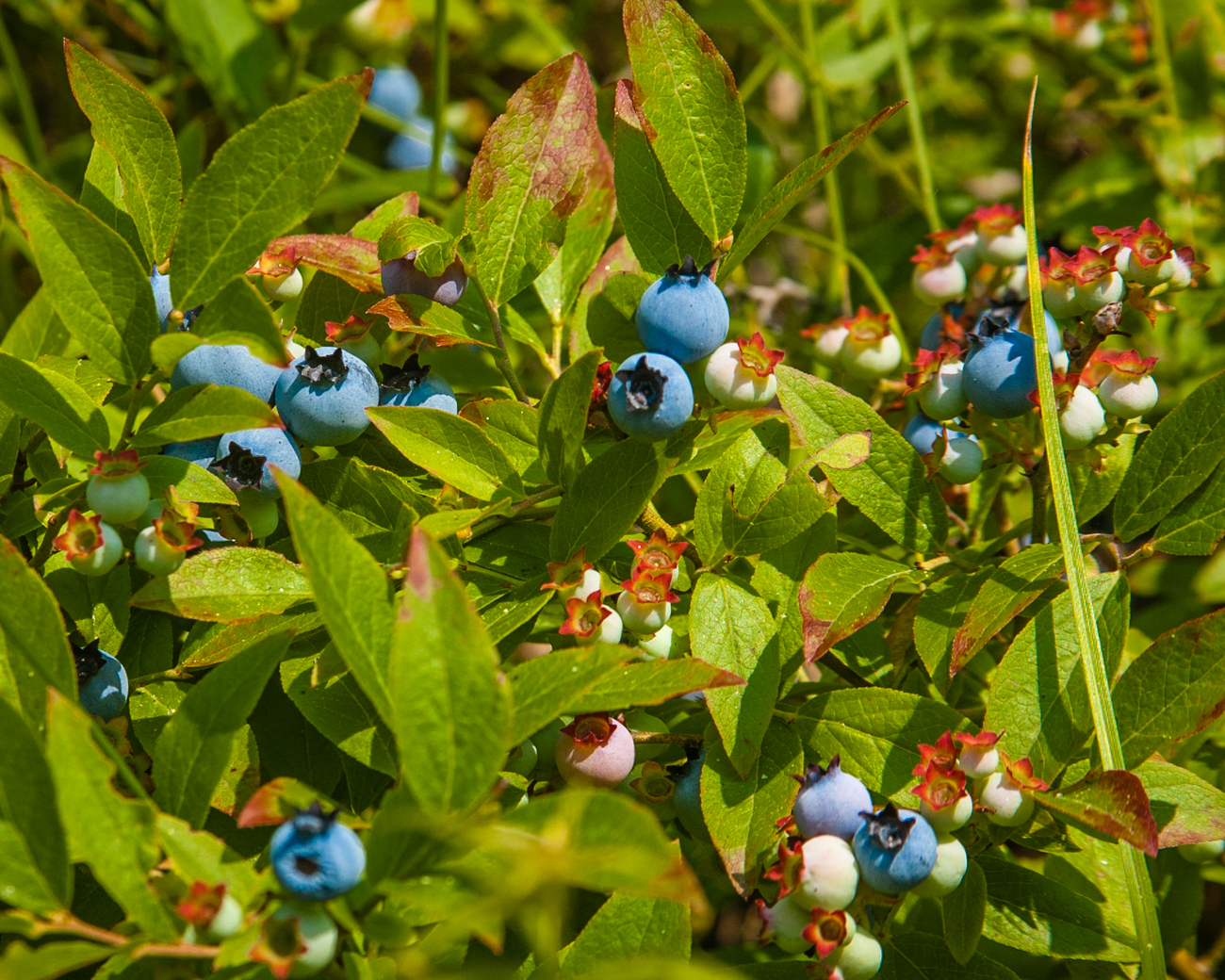
For 141 straight years, someone has walked to the same wild blueberry bush at the Blue Hill Observatory in Milton and checked whether the first berry has ripened. This year, Chief Observer Matthew Douglas made the call on June 24 — about a week earlier than the bush ripened at the turn of the 20th century.
Boston University biologist Richard Primack has spent decades comparing that record to his own fieldwork near Walden Pond, using nature journals Thoreau kept in the 1850s as a baseline. His findings, laid out in his book "Walden Warming," show blueberries and other species blooming and fruiting earlier than they used to — in the very same woods Concord residents walk through on their way to the pond.
"The blueberry's especially an important example because the blueberry is one of the absolute favorite fruits of not only people, but also birds," Primack told WBUR. If the fruit ripens too early, he said, migratory birds that time their arrival around it may show up to nothing left to eat.
Blue Hill's chief scientist, Michael Iacono, said the observatory's average temperature has risen about 5 degrees Fahrenheit since the 19th century. He calls the dataset a "blueberry-to-blueberry comparison" — the same bush, same spot, same method, for 141 consecutive years. Scientists haven't fully analyzed the data yet, so they can't say for certain that warming springs are the direct cause, but the pattern lines up with what researchers are seeing elsewhere.
In Maine, wild blueberry specialist Lily Calderwood said harvest windows have shifted two to three weeks earlier, forcing farmers to prepare for unpredictable seasons at higher cost. Theresa Crimmins, director of the USA National Phenology Network, said winters are shrinking broadly and seasonal shifts are showing up earlier across plant and animal life — calling the Blue Hill dataset "phenomenal" for its rarity and length.
Primack's "Walden Warming" is available at the Concord Free Public Library.