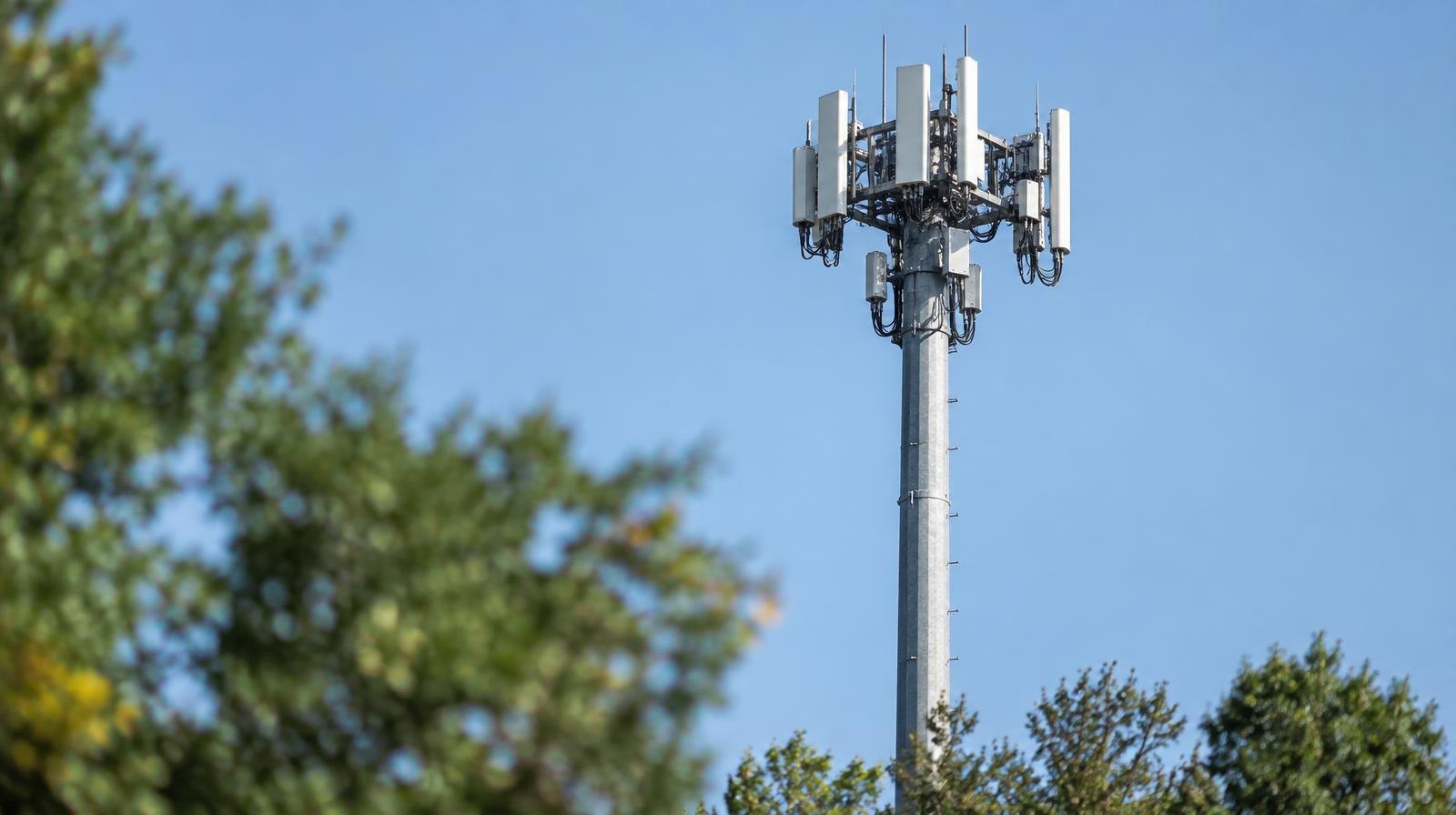
Concord's Zoning Board of Appeals granted a special permit for a 150-foot wireless communication tower on town-owned land at 755 Walden St.
The board voted 3-0 at its Thursday, Sept. 10 meeting to approve the application from Wireless Edge Towers III, LLC, according to meeting minutes approved Nov. 12. Chair Theo Kindermans opened the hearing. Vice Chair Ravi Faiia made the motion to approve, and Associate Member Stephen Newbold seconded it. Full Member Elizabeth Dwyer-Leonard was absent.
The tower is meant to improve gaps in wireless service for Concord's police, fire, EMS and public works departments, as well as residents, businesses and commercial cellular carriers. The board noted the tower would not resolve every wireless coverage problem in town.
Attorney Michael Dolan, representing Wireless Edge, told the board the town had identified the roughly 35-acre municipal property as a fitting location. The site already houses a capped former landfill, a solar farm, a composting facility and storage for town vehicles and equipment. No single-family homes immediately abut the parcel, and surrounding land is largely municipal, state, highway and conservation property.
A balloon test and visibility study showed that topography, sight lines and mature trees would substantially screen the tower, Dolan said. The facility would not require FAA lighting or markings.
Board members asked why the tower needed to reach 150 feet. Dolan explained the height was primarily driven by AT&T and Verizon requirements while also providing vertical separation for three additional carriers and municipal antennas. Whip antennas for municipal use could extend an additional 15 to 20 feet above the tower's top, a point the board flagged for clarification in earlier meeting minutes. Town Planner Elizabeth Hughes agreed to revise those minutes accordingly.
Radiofrequency monitoring
A significant portion of the hearing focused on radiofrequency emission monitoring. Resident Gail Hire of 54 Nancy Rd. questioned whether Concord's zoning bylaw made RF monitoring mandatory rather than discretionary. She urged the board to confirm whether the FCC exemption applied to this particular facility and argued that monitoring could provide additional public assurance.
Town Counsel Mina Makarious said the bylaw does reference pre- and post-testing, but federal law and FCC guidance create a complicated legal framework. He noted that RF standards are established and enforced federally and that the town's principal recourse, even if local monitoring found an issue, would likely be to report it to the Federal Communications Commission. He added that monitoring requirements had not been incorporated into the town's request for proposals or lease, and that lease terms fell outside the ZBA's jurisdiction.
The board concluded the facility appeared to satisfy federal categorical exclusion criteria and that routine monitoring was not required in every circumstance. Commercial carrier antennas would begin around 100 feet above ground, with municipal antennas between roughly 75 and 91 feet. The nearest publicly accessible area, the Walden Pond Visitor Center, is more than 500 feet from the proposed tower.
Resident William Andrews of 23 Grant St. asked during public comment where coverage maps could be reviewed. He was directed to the application documents filed with the Board of Appeals.
Earlier Planning Board review
Concord's Planning Board had reviewed the project at its June 16 meeting as part of a required Section 106 Historic Review, according to those minutes. The board reached consensus that the Historical Commission was better suited to address historic concerns and chose not to participate as a consulting party. Members also noted the tower appeared unlikely to conflict with a separate solar expansion and battery storage project at the site.